How Long Does It Take to Build a WordPress Website?
 WordPress Development
|
WordPress Development
|  4 minutes
Table of Contents
- Typical Timelines by Project Type
- What Actually Drives the Timeline
- A Realistic Project Phase Breakdown
- How to Keep Your Project on Schedule
- Frequently Asked Questions
One of the most common questions business owners ask before starting a WordPress project is how long it will take. The honest answer is: it depends heavily on scope — but there are realistic benchmarks that can help you plan your timeline and set appropriate internal expectations.
This guide breaks down typical timelines by project type and explains what actually drives how long a WordPress build takes.
Typical Timelines by Project Type
Simple brochure website (5–10 pages): 2–4 weeks. Using a pre-built theme with light customisation, minimal custom functionality, and content that’s ready to go.
Standard business website with custom design (10–20 pages): 4–8 weeks. Involves custom design work, more substantial content development, and moderate functionality like contact forms, service pages, and basic SEO setup.
Complex business website with custom functionality: 8–16 weeks. Includes custom integrations, membership areas, booking systems, or advanced functionality requiring bespoke development.
eCommerce website (WooCommerce): 6–14 weeks depending on catalogue size, payment gateway integrations, and shipping logic complexity.
Enterprise-level website: 4–6+ months. Involves extensive stakeholder input, complex information architecture, custom integrations with internal systems, and often multiple rounds of design and development iteration.
What Actually Drives the Timeline
Content readiness: This is, by a wide margin, the most common cause of delayed website projects. If your copy, images, and other content aren’t ready when development begins, the timeline extends — often significantly. Have your content prepared, or budget for content development as part of the project.
Number of feedback and revision rounds: Every round of stakeholder feedback adds time. Projects with multiple internal approvers (marketing, leadership, legal) typically take longer than those with a single decision-maker.
Complexity of custom functionality: Standard functionality (forms, blog, basic pages) is fast to implement. Custom integrations, unique interactive features, or non-standard functionality require additional development and testing time.
Design approval process: If design mockups need multiple rounds of revision before approval, this extends the overall timeline before development even begins.
Developer or agency capacity: A developer juggling multiple simultaneous projects will naturally take longer than one dedicated primarily to your build. Ask about capacity and realistic availability before committing to a timeline.
A Realistic Project Phase Breakdown
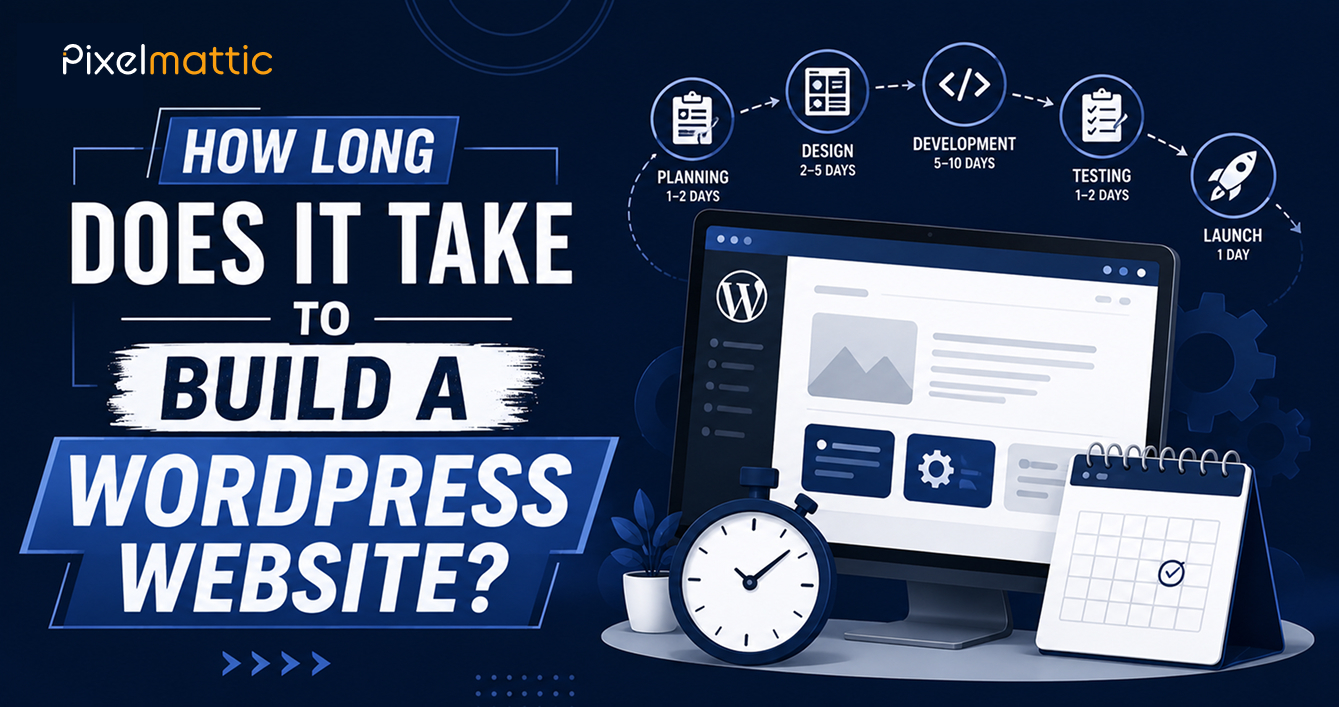
Discovery and planning: 3–7 days. Requirements gathering, sitemap planning, and technical scoping.
Design: 1–3 weeks. Wireframing (if applicable), visual design, and revision rounds.
Development: 2–6 weeks. Building out pages, functionality, and integrations.
Content population: 3–7 days. This can run in parallel with development if content is ready in advance.
Testing and QA: 3–7 days. Cross-browser and cross-device testing, functionality checks, and performance review.
Launch and post-launch monitoring: 1–3 days for launch, followed by close monitoring for the first week or two.
How to Keep Your Project on Schedule
Prepare content before development begins, or agree on a firm content deadline as part of the project timeline. Consolidate feedback from all stakeholders before sending it to your developer, rather than sending multiple rounds of piecemeal comments. Set clear approval deadlines for each project phase. Choose a developer or agency with realistic, demonstrated capacity for your project size.
Need a WordPress Website Built on a Realistic, Dependable Timeline?
Get a project timeline estimate from Pixelmattic.
Frequently Asked Questions
Can a WordPress website be built in one week?
For very simple, template-based sites with minimal customisation and content ready to go, a one-week turnaround is possible, but it’s the exception rather than the norm for a genuinely professional, custom business website.
What causes WordPress website projects to run late?
The most common cause is delayed content delivery from the client side, followed by extended feedback and revision cycles, and scope changes introduced mid-project.
How long does an eCommerce WordPress website take to build?
Typically 6–14 weeks, depending on the size of the product catalogue, the complexity of payment and shipping integrations, and whether custom functionality (like subscriptions or advanced filtering) is required.
 October 1, 2026
 WordPress Development
 WordPress Development
 WordPress Development
 WordPress Development