How to Negotiate Better Rates With a WordPress Developer
 WordPress Development
|
 6 minutes
Table of Contents
- Short Answer
- Start With a Brief a Developer Can Price
- Compare Itemised Quotes
- Levers That Actually Work
- What to Avoid
- When the Quote Drops Too Easily
- A Negotiation Example
- Payment Terms Are a Lever Too
- Hourly or Fixed Price
- Keep the Relationship in Mind
- Wording That Works
- Frequently Asked Questions
Short Answer
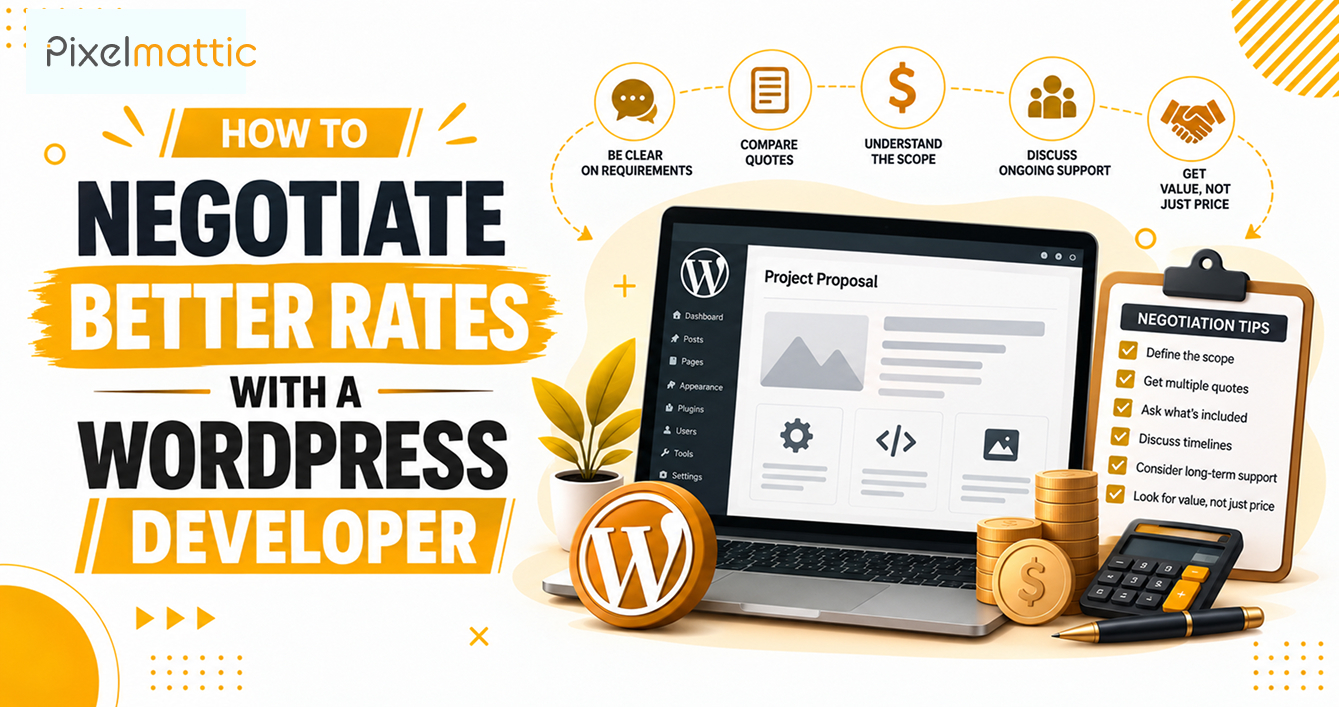
You will get better results negotiating scope, phasing, and payment terms than pushing the hourly rate down. Bring a clear written brief, compare itemised quotes, and trade flexibility on timeline or commitment for value. Heavy discounts on rate usually come back as cut corners, so aim for a fair price with a clear scope.
Most business owners negotiate a quote by asking for a discount. It sometimes works, and it often costs more than it saves. Developers price in hours, so if the hours are real, a discount has to come out of testing, documentation, or attention.
A better approach negotiates the things that move total cost without squeezing quality.
Start With a Brief a Developer Can Price
List the pages, features, integrations, who supplies content and when, your deadline, and your budget range. Sharing a budget feels risky, but it usually produces better proposals, because the developer can shape the scope to fit instead of guessing high to be safe.
Compare Itemised Quotes
Ask every vendor for line items. Two quotes that differ by 40 percent usually differ in scope, not in price. One may include discovery, QA, and training while the other quietly leaves them out. Itemised quotes show where the gap sits and give you something specific to discuss.
Levers That Actually Work
Phase the Project
Launch the pages that drive revenue first and add the rest in a second phase. This lowers the upfront cost and gives you real data before you spend more.
Trim Low-Value Scope
Fewer unique page templates, a plugin in place of a custom feature, or reusing existing content can remove hours without hurting results.
Offer Timeline Flexibility
A developer with a gap in their schedule may price lower for a flexible deadline. Rush work costs more for the same reason.
Bundle Build and Maintenance
A 12-month maintenance agreement alongside the build often earns a better build price or a locked rate.
Make the Project Easy to Run
Deliver content on time, name one decision-maker, and consolidate feedback. Developers price in the risk of delays and rework, and you can lower that risk.
Offer a Case Study
If the work earns it, agree to a testimonial or case study in writing. Some agencies will trade value for it.
What to Avoid
Do not ask for unpaid sample work, and do not ask a vendor to drop testing or documentation to hit a price. Playing quotes against each other aggressively tends to sour the relationship before it starts. Going quiet between rounds also costs you, since developers reschedule work around responsive clients.
When the Quote Drops Too Easily
If a developer accepts a 40 percent cut without hesitation, ask what changed. Either the first quote was padded or the new scope will be thinner than you think. Both are worth knowing before you sign.
A Negotiation Example
Take a business that needs a 15-page service website and receives two quotes: $9,500 from one agency and $6,200 from another. A discount request to the first agency might move the price by a few hundred dollars. A conversation about scope can do more.
The itemised quotes show the cheaper one leaves out discovery workshops, a custom design phase, and training, and uses a premium theme in place of original layouts. The more expensive one includes all of that. The buyer decides that discovery and training matter, original layouts do not, and asks the first agency to price a version with a themed design. The quote lands at $7,400, with the work that matters left intact. That outcome beats a blanket discount, and both sides are happy with it.
Payment Terms Are a Lever Too
Structure matters as much as the total. Milestone-based payments, such as 30 percent at kickoff, 40 percent at design approval, and 30 percent on launch, protect you. Developers sometimes accept slightly lower totals for faster payment, such as settling invoices within seven days. Asking for 60 or 90 days to pay usually pushes the price up, because the developer carries the cost of waiting.
Be careful about asking for deep reductions in exchange for a promise of future work. Unless it is written into the agreement, it is only a hope, and it rarely lowers the price of the current project in any lasting way.
Hourly or Fixed Price
A fixed price protects you from overruns when the scope is clear. Hourly billing suits work where the scope is likely to change, such as ongoing improvements or exploratory projects. In a negotiation, a fixed price with a clear change process often gives both sides more certainty than a discount on the hourly rate. If you go hourly, ask for a cap or a not-to-exceed figure and a weekly summary of hours used, so there are no surprises at invoice time.
Keep the Relationship in Mind
You will probably work with this team for years. A fair deal that leaves the developer with a reasonable margin tends to get better attention when you need a quick fix at short notice. A deal squeezed to the last dollar tends to get the minimum. Aim for terms you would still be happy with in twelve months.
Wording That Works
Try, “Our budget is between $6,000 and $8,000. What would you include inside that, and what would you move to a second phase?” Or, “Can you break this into line items so we can decide where to simplify?” Both questions keep the conversation on value and give the developer room to propose options.
Looking for a Fair, Transparent Quote With a Scope You Can Trust?
Pixelmattic prices projects in clear line items and will help you phase the work to fit your budget.
Frequently Asked Questions
Is it rude to negotiate with a developer?
No. Developers expect it. Negotiating scope, phasing, and terms is normal and often welcomed, while demanding a flat percentage off tends to land badly.
How much of a discount is reasonable?
A 5 to 10 percent adjustment is common in exchange for flexibility or a larger commitment. Larger cuts usually come with reduced scope, so ask what changes.
Can I negotiate a maintenance retainer too?
Yes. Annual commitments, bundled services, and a defined monthly hours allowance are all common ways to lower the effective rate.
 November 12, 2026
 WordPress Development
 WordPress Development
 WordPress Development
 WordPress Development